
If you’re researching autism assessments, you may have come across the term ADOS, often described as “the gold standard” for diagnosing autism.
This can raise important questions:
- What is an ADOS assessment?
- Is an ADOS required for an autism diagnosis?
- Does ADOS work for adults as well as children?
- What actually happens during an ADOS assessment?
- How can I prepare for my ADOS assessment?
In this article, our Clinical Director, Jo Condon uses her extensive autism knowledge and experience to explain what ADOS is, how the ADOS is used and what to expect in an ADOS assessment.
What is the Autism Diagnostic Observation Schedule (ADOS)?
The Autism Diagnostic Observation Schedule, Second Edition (ADOS-2) is a standardised, semi-structured observational assessment used as part of some autism diagnostic assessments.
During the ADOS-2, a trained clinician creates a series of opportunities to observe aspects of social communication, reciprocal interaction, play or imagination, and restricted or repetitive behaviours that may be relevant when considering autism. The activities used vary according to the person’s age and level of spoken language.
It is important to understand that the ADOS-2 is not a test for autism that someone can simply pass or fail. It provides one source of clinical information and should be interpreted alongside developmental history, information about everyday functioning and other relevant assessment findings.
Is an ADOS required for an autism diagnosis?
No. An ADOS assessment is not compulsory for every autism diagnosis.
A comprehensive autism assessment should bring together information from different sources rather than relying on the result of one diagnostic instrument. For children and young people, NICE guidance on autism recognition, referral and diagnosis describes a broader diagnostic assessment process rather than diagnosis being determined by one individual tool.
The ADOS-2 can provide extremely useful structured observational information, which is why it is widely used within autism services. However, it should form part of clinical formulation rather than being treated as a definitive autism test.
What happens during an ADOS assessment?
The ADOS assessment looks different depending on the individual’s age, language level and communication style.
During an ADOS session, a clinician may:
- Engage in conversation or shared activities
- Use structured activities or tasks
- Observe social reciprocity, communication style and non‑verbal cues
- Note sensory responses, imagination and flexibility
For children, the ADOS involves play‑based interaction. For adults, it involves more conversation and exploration of experiences.
The session is designed to feel supportive and respectful, and is not a test with right or wrong answers.
ADOS modules: why assessments are tailored
There are five ADOS-2 modules. The appropriate module is selected according to factors including the person’s age and expressive language level, rather than age alone.
The ADOS-2 is designed for use from early childhood through adulthood
The five ADOS modules
Toddler module: for very young children at an early stage of language development
Module 1: for those who do not consistently use phrase speech
Module 2: for those who use phrase speech but are not yet verbally fluent
Module 3: generally used with verbally fluent children
Module 4: designed for verbally fluent adolescents and adults
The exact module is selected by the clinician according to the ADOS-2 administration criteria
Is ADOS the “gold standard” for autism diagnosis?
The ADOS is often described as a gold‑standard tool. This is because it has been widely tested and shown to be a valid, specific and reliable diagnostic assessment tool. As a semi-structured tool with specific training in administration, the test can be reliably replicated by different clinicians.
It is however important to understand that the ADOS-2 does not diagnose autism on its own.
A robust autism assessment also includes:
- A detailed developmental history
- Information from parents, partners or schools (where relevant)
- Clinical interviews
- Consideration of other conditions that may be present
At Jo Condon Autism Assessments, the ADOS is regularly used as part of our assessment process.
ADOS assessment for adolescents and adults
For verbally fluent older adolescents and adults, ADOS-2 Module 4 may be used. Module 4 uses structured activities and conversation to create opportunities for the clinician to observe social communication and interaction in real time. It is specifically intended for verbally fluent older adolescents and adults.
The clinician considers the quality of the person’s communication and interaction, alongside any restricted or repetitive behaviours that are relevant within the ADOS-2 framework.
There are no right or wrong answers. The purpose is not to assess intelligence, social skills or whether somebody can behave in a particular way.
Some adults understandably worry that masking may mean autism will be “missed” during an ADOS. A skilled clinician will be alert to possible compensatory strategies and camouflaging, but no single observation can show everything about how somebody functions across different settings or throughout their life. This is one reason ADOS findings need to be considered alongside developmental history and other clinical information.
ADOS for older children
For older children who are verbally fluent, the ADOS Module 3 is used, which consists of play activities, tasks and questions.
The assessment questions are focused on the child’s views and experiences, and the clinician will be interested in how the child shares these with them.
When administering the ADOS, the clinician will be observing for communication and interaction style, such as how the child:
- Uses non-verbal communication
- Uses language
- Responds to conversation cues
- Engages with social chit-chat
- Plays
The clinician will also note any relevant behaviours such as:
- Intense interests
- Sensory interests
- Repetitive behaviours
ADOS assessment for younger children
For younger children who are not yet verbally fluent, the ADOS consists of play activities, and there are numerous toys to engage with.
During the session, the clinician will administer the different ADOS tasks and will observe the child’s responses and behaviours. Specific things that the ADOS administrator will be looking for include:
- How the child makes requests
- Whether they use non-verbal communication, such as gesture
- If they enjoy games and interaction with the clinician
- Sensory seeking or sensory avoidant behaviours
- Repetitive behaviours
There is no pressure for the child to engage, and the ADOS will be adapted if the child shows any sign of upset or distress.
ADOS scores
After the session, the clinician codes specific behaviours according to the standardised ADOS-2 criteria. Relevant codes are then used within the appropriate ADOS-2 algorithm.
The resulting ADOS-2 classification can help clinicians understand whether the behaviours observed during that particular assessment are consistent with those commonly associated with autism.
However, an ADOS-2 score is not an autism diagnosis. Scores need to be interpreted alongside the person’s developmental history, current experiences, information from other settings where appropriate, and the clinician’s broader diagnostic assessment. This distinction matters because the ADOS-2 manual itself recommends communicating meaningful descriptions of observed behaviour rather than relying solely on algorithm scores.
If an ADOS-2 forms part of your assessment with us, your diagnostic report will explain the findings and how they contributed to the overall clinical conclusion.
How to prepare for an ADOS assessment
Preparing for an in-person ADOS Assessment
Adults
For adults, there is no specific preparation required before an in-person ADOS assessment. Unlike an exam or interview, the assessment is not something you can pass or fail. The aim is for clinicians to understand your experiences and observe social communication in a structured but natural way. For this reason, we encourage you not to rehearse answers or research how you “should” behave during the assessment. Attending as your usual self helps clinicians gain the most accurate understanding of your strengths, differences and support needs.
Child
If your child is very young, we will need you (or another parent) to attend the session. If this is the case it will be important that you sit in the background and do not interact with or encourage the child without the clinician specifically asking you to.
Apart from very young children, it is much better for the child to join the session with the clinician alone. We will want to see how the child manages in an unfamiliar environment with an unfamiliar person. Our clinicians have a wealth of experience of engaging with children with social interaction difficulties and will ensure your child is safe and comfortable while you relax in the waiting area.
Most children find the ADOS-2 activities enjoyable and the clinician will adapt the session to ensure your child is comfortable throughout. Before the session, it might be helpful to describe the appointment as ‘someone wanting to get to know them’ rather than as an assessment.
You can reassure them that there are no right or wrong answers, it is just about us finding out more about them.
If your child wants to bring a comforter along that’s fine, but we ask that they do not bring food into the session.
Final thoughts
The Autism Diagnostic Observation Schedule is a valuable assessment tool when used within a broader, professional clinical autism assessment piece of the puzzle.
A meaningful autism assessment looks at the whole person, across time, context and experience, not just what happens in one appointment.
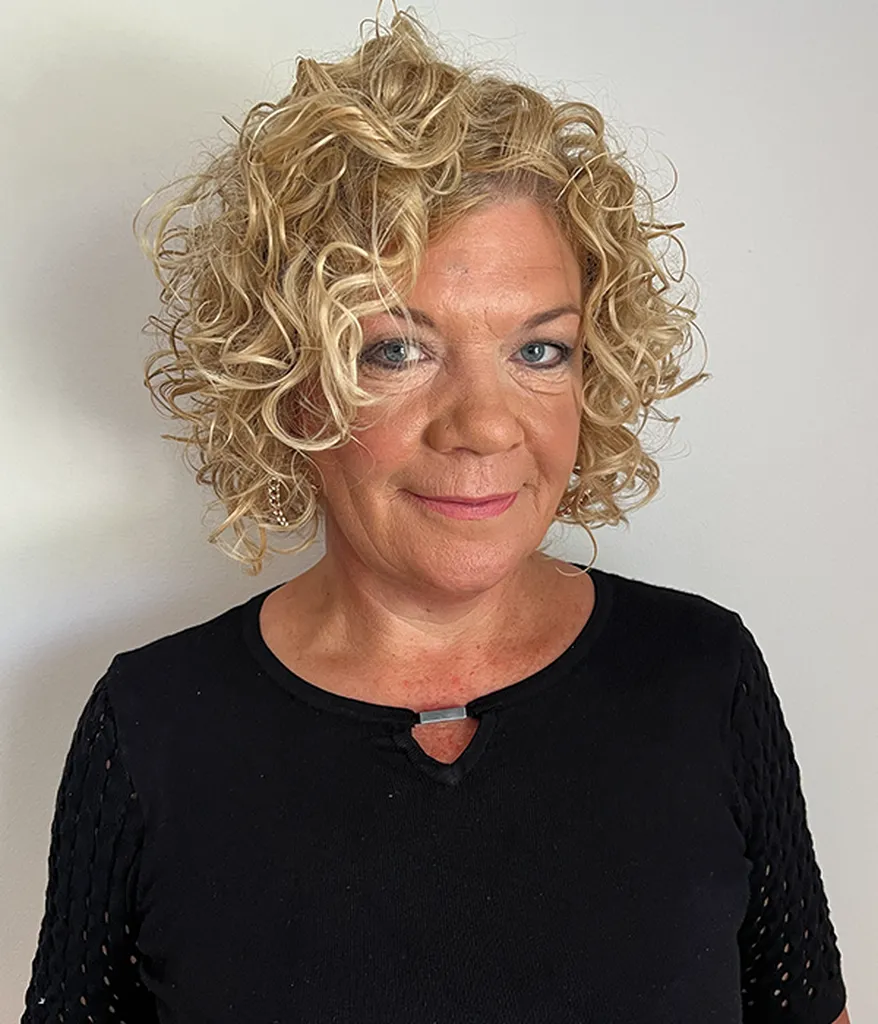
This article has been written by our Clinical Director, Johanna Condon. Jo is a leading expert in autism and has contributed to the field of autism through published research, developing national guidance and advising public and private organisations. She completed her first autism assessment in 2002 and has 24 years’ experience across the NHS, national government and independent services. Her work is grounded in a neurodiversity-affirming, person-centred approach.
FAQ
Does ADOS work for adults?
Yes. ADOS-2 can be used as part of an adult autism assessment. Module 4 is specifically designed for verbally fluent adolescents and adults.
Some autistic adults are concerned that years of masking or camouflaging may make autism less apparent during an observational assessment. Clinicians experienced in adult autism will consider this possibility carefully. However, no observational assessment can capture every aspect of someone’s experiences in one appointment. This is why ADOS-2 findings should be considered alongside developmental history, the person’s own account of their experiences and other clinically relevant information
Is ADOS used for children?
Yes. ADOS is commonly used as part of children’s autism assessments.
Different modules are available according to the child’s age and level of spoken language.
Depending on the module, the clinician may use play, activities and conversation to observe aspects of the child’s social communication, interaction, imagination and behaviour.
Importantly, the ADOS-2 provides a snapshot of behaviour during a structured appointment. It should be interpreted alongside information about the child’s development and how they communicate and function in everyday settings.
Who developed the ADOS?
The ADOS was first developed in 1989 by Catherine Lord, Michael Rutter, Pamela DiLavore, and Susan Risi.
In 2012, ahead of the changes to the diagnostic criteria for autism, the Autism Diagnostic Observation Schedule – second edition, or ADOS-2, was published. The ADOS-2 is the version that is currently used for autism assessments.
Can the ADOS be completed online?
In some circumstances, an autism observational assessment can be completed online, particularly for verbally fluent adolescents and adults. However, the standard ADOS-2 was developed for face-to-face administration, so an online assessment may need to use an adapted approach rather than being administered in exactly the same way.
Whether an online assessment is appropriate will depend on factors such as the person’s age, communication and language level, and individual circumstances. Younger children and people who are not yet verbally fluent, will need an in-person observational assessment.
If you are unsure which option is right for you or your child, we will discuss this with you before arranging your appointment and make sure the assessment approach is clinically appropriate.
How do I prepare for my ADOS assessment?
As an adult, the only preparation needed is in relation to accessing the session. Individuals may find it helpful to see the clinic and work out travel arrangements in advance to decrease anxiety around this on the day. If you are completing the ADOS online, you will be provided with instructions regarding setting this up. Remember, you will need a tablet or laptop as an ADOS cannot be completed via a phone.
How do I prepare my child for the ADOS assessment?
There is no specific preparation needed. You may wish to reassure your child that the session is about the clinician wanting to get to know them and that there are no right or wrong answers to any of the questions they might ask.
Your child may want to bring a familiar toy or object with them. The ADOS is usually completed in under an hour. It is best if your child does not bring food in with them, but they can bring a drink.
How long does the ADOS assessment take?
The ADOS administration time can vary depending on the individual being assessed. Usually, the ADOS takes between 40 and 60 minutes.