By Jo Condon, Director and Clinical Lead
There is a moment that I witness almost every week.
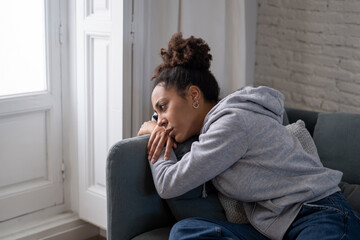
A woman sits in our feedback appointment, in tears. Not because she has been diagnosed as autistic, but because, for the first time in her life, somebody has understood her.
She is frequently in her thirties, forties or fifties. She has spent decades asking herself the same painful questions:
- “Why do I find life harder than everyone else?”
- “Why am I always exhausted?”
- “Why can everyone else seem to cope?”
For many women, receiving an autism diagnosis is not the beginning of a story. It is the explanation for a lifetime of experiences that never seemed to make sense.
As the owner of an autism assessment service, I have had the privilege of meeting hundreds of women whose autism was missed throughout childhood, adolescence and adulthood. Their stories are often different in the details, but remarkably similar in their themes: masking, burnout, self-doubt, anxiety, bullying, misdiagnosis and an overwhelming sense of feeling “different” without knowing why.
A Hidden Population
Research increasingly suggests that a substantial number of autistic adults remain undiagnosed.
A landmark population study led by researchers including O’Nions et al. (2023) estimated that between 59% and 72% of autistic people in England may be undiagnosed, with underdiagnosis particularly pronounced in older adults. More recent work from King’s College London’s Institute of Psychiatry, Psychology & Neurosciencesuggests that the problem may be even greater amongst older generations. A 2025 review estimated that approximately 89% of autistic adults aged 40–59 years and 97% of autistic adults aged over 60 years remainundiagnosed in the UK.
Although these figures relate to all autistic adults rather than women specifically, there are compelling reasons to believe that many undiagnosed individuals within this “lost generation” are female.
Although no study has yet calculated the precise number of undiagnosed autistic women in Wales, available evidence suggests the figure could be substantial. Wales is home to approximately 1.59 million women. Applying commonly accepted autism prevalence estimates of around 1% would suggest that roughly 15,000–16,000 women in Wales may be autistic. If the underdiagnosis rates reported by researchers at King’s College London are reflected in Wales, it is possible that between 9,000 and 11,000 autistic women may remain undiagnosed. These figures should be viewed as estimates rather than exact counts, but they illustrate the scale of the hidden population of autistic women who may still be living without recognition or support.
Historically, autism research was based largely on boys. Diagnostic criteria, professional training and public understanding were all shaped by predominantly male presentations of autism. As a result, countless girls learned to hide their difficulties rather than attracting attention because of them. Research now shows that autistic females are more likely to engage in social camouflaging and masking, making their autism less visible to others and increasing the likelihood of delayed diagnosis.
The Cost of Spending a Lifetime Masking
One of the most common things we hear from clients is:
“I felt like an actor in my own life.”
Many autistic women become experts in observation. They study how others speak. They rehearse conversations before having them. They avoid phone calls. They copy social behaviours that appear intuitive for other people.
On the surface they may seem highly successful.
Underneath, they are exhausted.
Research by Hull and colleagues has demonstrated that masking is associated with elevated levels of anxiety, depression and psychological distress. Many late-diagnosed women describe feeling as though they have spent decades performing a version of themselves rather than living authentically.
Women frequently tell us they were praised for appearing organised, compassionate, capable and sociable. Yet privately they were spending enormous amounts of energy managing sensory overwhelm, social confusion and the constant fear of getting things wrong.
The result is often profound burnout.
Not ordinary tiredness.
Not workplace stress.
But a complete collapse of the coping strategies that have allowed them to survive for years.
The Stories Behind the Diagnosis
The women who come through our doors do not fit stereotypes.
We assess teachers who have spent twenty years supporting children while silently struggling themselves.
We meet nurses who excel clinically but return home overwhelmed and unable to speak after long shifts.
We assess women working in the IT sector whose extraordinary attention to detail has enabled successful careers but who have spent years feeling disconnected from workplace culture.
We meet shop managers who can run busy retail environments, manage teams and deal with customers all day, yet arrive home completely exhausted from the social and sensory demands of work.
We also assess stay-at-home mums who have spent years prioritising the needs of their children and families, often believing that their exhaustion, anxiety or overwhelm reflected personal failings rather than undiagnosed autism. Many first begin questioning whether they may be autistic after one of their children receives a diagnosis and they recognise the same lifelong traits in themselves.
Many are senior professionals. Many are highly educated. Some left employment because burnout became unmanageable. Others have spent decades running households and caring for families whilst privately wondering why everyday life seems so much harder for them than for others.
Many have spent years being told there is nothing wrong, yet their stories often reveal the same themes.
Using Alcohol to Cope Socially:
Some women describe using alcohol as a form of social camouflage.
Alcohol can temporarily reduce social anxiety and the mental effort involved in monitoring conversations, facial expressions and social expectations.
Several clients have told us that they never felt genuinely comfortable at social events unless alcohol was involved. They spent years believing they were shy or socially anxious, without recognising that social interactions were demanding because they were autistic.
Workplace Bullying:
Another recurring theme is workplace bullying.
Many women describe being labelled as “too sensitive”, “too blunt”, “too intense” or “difficult”.
Others report becoming the target of exclusion or gossip despite working extremely hard and following workplace rules meticulously.
Research has consistently found that autistic adults experience higher rates of workplace difficulties, including discrimination and victimisation. For women who have spent years masking, repeated experiences of rejection can be devastating for self-esteem.
Misdiagnosis:
Perhaps one of the saddest aspects of late diagnosis is how many women have spent years receiving support for symptoms without anyone identifying the underlying cause.
We frequently hear histories involving diagnoses of:
- Anxiety disorders
- Depression
- Social anxiety
- Eating disorders
- Borderline personality disorder
- Obsessive-compulsive disorder
These conditions can genuinely co-occur with autism, but many women tell us that treatments never quite explained the bigger picture.
They often felt that professionals were addressing isolated pieces of a puzzle while missing the image itself.
Research exploring late-diagnosed autistic women has repeatedly identified histories of misdiagnosis and mental health difficulties prior to autism recognition.
The Moment Everything Makes Sense:
One of the most powerful aspects of assessment is seeing decades of self-blame begin to dissolve.
Women often tell us:
- “I thought I was broken.”
- “I thought I was failing at being an adult.”
- “I thought everybody found life this hard.”
Receiving an autism diagnosis does not erase past difficulties.
It does not undo years of misunderstanding.
It does not remove the impact of bullying, failed relationships or burnout.
What it can provide is something many women have never had before: context.
Instead of viewing themselves as flawed, lazy, oversensitive or inadequate, they begin to understand themselves through a different lens.
Many describe feeling relief.
Some describe grief for the years they spent without understanding.
Most experience a mixture of both.
Why Recognition Matters:
The stories we hear every day reinforce an important message: autism is not new simply because it has only just been diagnosed.
For many women, autism has been present throughout every stage of life, influencing friendships, education, careers, relationships and mental health.
The growing body of research on female autism is helping professionals recognise presentations that were previously overlooked. Increased awareness of masking, camouflaging, sensory differences and the female autism phenotype is allowing more women to access assessment and support than ever before.
Yet King’s College London’s estimates suggest there may still be hundreds of thousands of autistic adults living without recognition or diagnosis.
Behind every statistic is a person.
- A teacher wondering why she is exhausted.
- A mother seeing her daughter struggle in the same way she did.
- A data analyst afraid to speak in case she says the wrong thing.
Women who have spent decades believing they were failing, when in reality they were navigating a world that was not designed for the way their brains work.
For many of the women we assess, diagnosis does not give them a new identity.
It gives them permission to stop blaming themselves.
And sometimes, after a lifetime of confusion, that understanding can be life-changing.
References
Bargiela, S., Steward, R. and Mandy, W. (2016) The experiences of late-diagnosed women with autism spectrum conditions: An investigation of the female autism phenotype. Journal of Autism and Developmental Disorders, 46(10), pp. 3281–3294.
Belcher, H.L., Morein-Zamir, S., Stagg, S.D. and Ford, R.M. (2022) Shining a Light on a Hidden Population: Social Functioning and Mental Health in Women Reporting Autistic Traits But Lacking Diagnosis. Journal of Autism and Developmental Disorders.
Hull, L., Petrides, K.V. and Mandy, W. (2020) The female autism phenotype and camouflaging: A narrative review. Review Journal of Autism and Developmental Disorders, 7(4), pp. 306–317.
Milner, V.L., McIntosh, H., Colvert, E. and Happé, F. (2019) A Qualitative Exploration of the Female Experience of Autism Spectrum Disorder (ASD). Journal of Autism and Developmental Disorders, 49(6), pp. 2389–2402.
O’Nions, E., Petersen, I., Buckman, J.E.J., et al. (2023) Autism in England: assessing underdiagnosis in a population-based cohort study of prospectively collected primary care data. The Lancet Regional Health – Europe.
Stewart, G.R. and Happé, F. (2025) Ageing Across the Autism Spectrum. Annual Review of Developmental Psychology. Findings reported by King’s College London estimating that 89% of autistic adults aged 40–59 and 97% of those aged 60+ remain undiagnosed.
Leedham, A., Thompson, A.R., Smith, R. and Freeth, M. (2020) “I was exhausted trying to figure it out”: The experiences of females receiving an autism diagnosis in middle to late adulthood. Autism, 24(1), pp. 135–146.