Introduction
It can be confusing and distressing for parents when a child chatters happily at home but seems unable to speak at school, in social situations or around unfamiliar people. Family members, teachers and even healthcare professionals may wonder why a child who is clearly capable of talking suddenly appears unable to use their voice in certain situations.
Selective mutism is often misunderstood. It is sometimes mistaken for shyness, oppositional behaviour or a language difficulty. In reality, selective mutism is a recognised anxiety disorder that can have a significant impact on a child’s social, emotional and educational wellbeing.
Increasingly, researchers are also recognising an important relationship between selective mutism and autism. While the two conditions are distinct, some autistic children experience selective mutism, and some children initially thought to have selective mutism are later found to be autistic. Understanding the overlap is important because it influences both assessment and support.
This article explains what selective mutism is, how it differs from shyness, its relationship with autism, common signs to look for and evidence-based strategies that can help.
What Is Selective Mutism?
Selective mutism (SM) is an anxiety disorder characterised by a consistent inability to speak in specific social situations despite being able to speak comfortably in others.
Typically, a child speaks freely at home but becomes unable to speak in environments such as:
- School
- Nursery
- Clubs and activities
- Family gatherings
- Public places
The child is not choosing to remain silent. Rather, their anxiety creates a “freeze response” that makes speaking feel impossible in certain situations.
Children with selective mutism usually have age-appropriate language skills and understand language normally. The difficulty lies in being able to access speech when anxiety is high.
Research suggests selective mutism is relatively uncommon, affecting less than 1% of children, although milder presentations may go undetected.
Selective Mutism Is Not the Same as Shyness
Many quiet or reserved children are described as shy, but selective mutism is significantly more than shyness.
A shy child may:
- Take time to warm up
- Speak quietly
- Feel nervous initially
However, they can usually communicate when necessary.
A child with selective mutism may:
- Want to speak but feel unable to
- Appear “frozen”
- Avoid situations where speaking is expected
- Communicate through gestures, facial expressions or nodding instead
Teachers often describe children with selective mutism as “silent at school but completely different at home.”
What Causes Selective Mutism?
The exact cause is not fully understood, but research consistently shows that anxiety plays a central role.
Many children with selective mutism experience:
- Social anxiety
- Fear of making mistakes
- Fear of negative evaluation
- Difficulties coping with unfamiliar situations
Studies suggest that selective mutism sits within the broader family of anxiety disorders and has particularly strong links with social anxiety.
Other factors that may contribute include:
- Temperamental differences
- Family history of anxiety
- Speech and language difficulties
- Sensory sensitivities
Neurodevelopmental differences, including autism
What Is the Link Between Selective Mutism and Autism?
For many years, selective mutism and autism were viewed as entirely separate conditions. However, recent research suggests there may be much greater overlap than previously recognised.
Both conditions can involve:
- Reduced verbal communication
- Social difficulties
- Anxiety in social situations
- Preference for familiar people
- Sensory sensitivities
- Difficulties coping with unpredictability
The important difference is the reason underlying these behaviours.
In Selective Mutism:
The primary difficulty is anxiety.
The child knows what they want to say and has the language skills to express themselves but becomes unable to speak in certain situations because anxiety overwhelms them.
In Autism:
Communication differences arise from broader neurodevelopmental differences involving:
- Social communication
- Social understanding
- Sensory processing
- Information processing
- Behavioural flexibility
However, many autistic children also experience significant anxiety, meaning both conditions can occur together.
Some research has found that a substantial proportion of children with selective mutism show autistic characteristics or meet criteria for autism following detailed neurodevelopmental assessment.
This highlights the importance of thorough, multidisciplinary assessment when selective mutism is suspected.
Signs of Selective Mutism
Children with selective mutism may:
- Speak normally at home but not at school.
- Speak freely with close family but not unfamiliar adults.
- Use gestures instead of speech.
- Nod, point or shrug rather than answer questions.
- Avoid situations where speaking might be expected.
- Appear frozen or expressionless when spoken to.
- Become distressed when pressured to talk.
- Whisper to one trusted person but nobody else.
- Seem socially confident at home but highly anxious elsewhere.
Some children may also experience:
- Separation anxiety
- Perfectionism
- Sensory sensitivities
- School avoidance
- Low self-esteem
How Does Selective Mutism Affect Children?
Selective mutism can affect far more than communication.
Difficulties may include:
Friendships:
Children may struggle to:
- Join in conversations
- Initiate friendships
- Participate in social activities
Education:
Children may:
- Avoid answering questions
- Find group work difficult
- Underperform academically because they cannot demonstrate their knowledge
Emotional Wellbeing:
Over time, selective mutism can contribute to:
- Anxiety
- Frustration
- Loneliness
- Reduced confidence
This is one reason why early support is important.
Evidence-Based Strategies That Can Help
Reduce Pressure to Speak:
One of the most important principles is:
Do not force speech.
Repeated requests such as:
- “Say hello.”
- “Use your words.”
- “Why won’t you answer?”
often increase anxiety and make speaking less likely.
Instead:
- Accept alternative forms of communication.
- Respond warmly to non-verbal communication.
- Focus on reducing anxiety first.
Build Communication Gradually:
Many interventions use a technique called graded exposure.
This involves gradually increasing communication demands in manageable steps.
For example:
- Communicating non-verbally.
- Whispering to a trusted adult.
- Speaking to one trusted person.
- Speaking in a familiar setting.
- Expanding speech to new people and environments.
Small successes build confidence and reduce anxiety over time.
Work Closely with School:
Schools play a vital role.
Helpful adjustments might include:
- Avoiding putting the child on the spot.
- Allowing non-verbal responses.
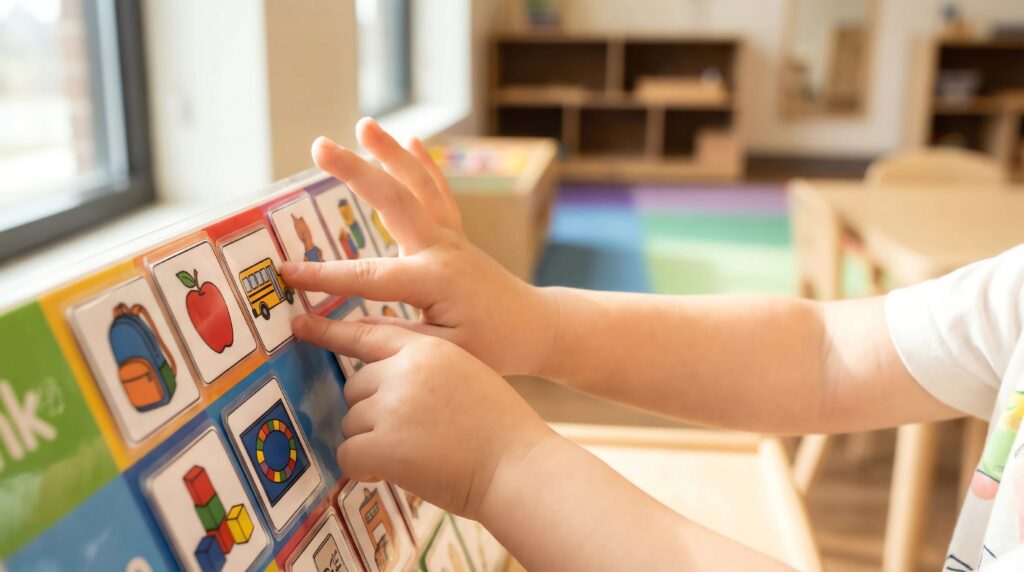
- Using visual supports.
- Identifying a trusted adult.
- Creating low-pressure opportunities for communication.
Children should never be punished for not speaking.
Support Sensory Needs:
For autistic children, sensory overload may increase anxiety and contribute to communication shutdown.
Supporting sensory regulation can therefore indirectly support communication.
This may include:
- Quiet spaces
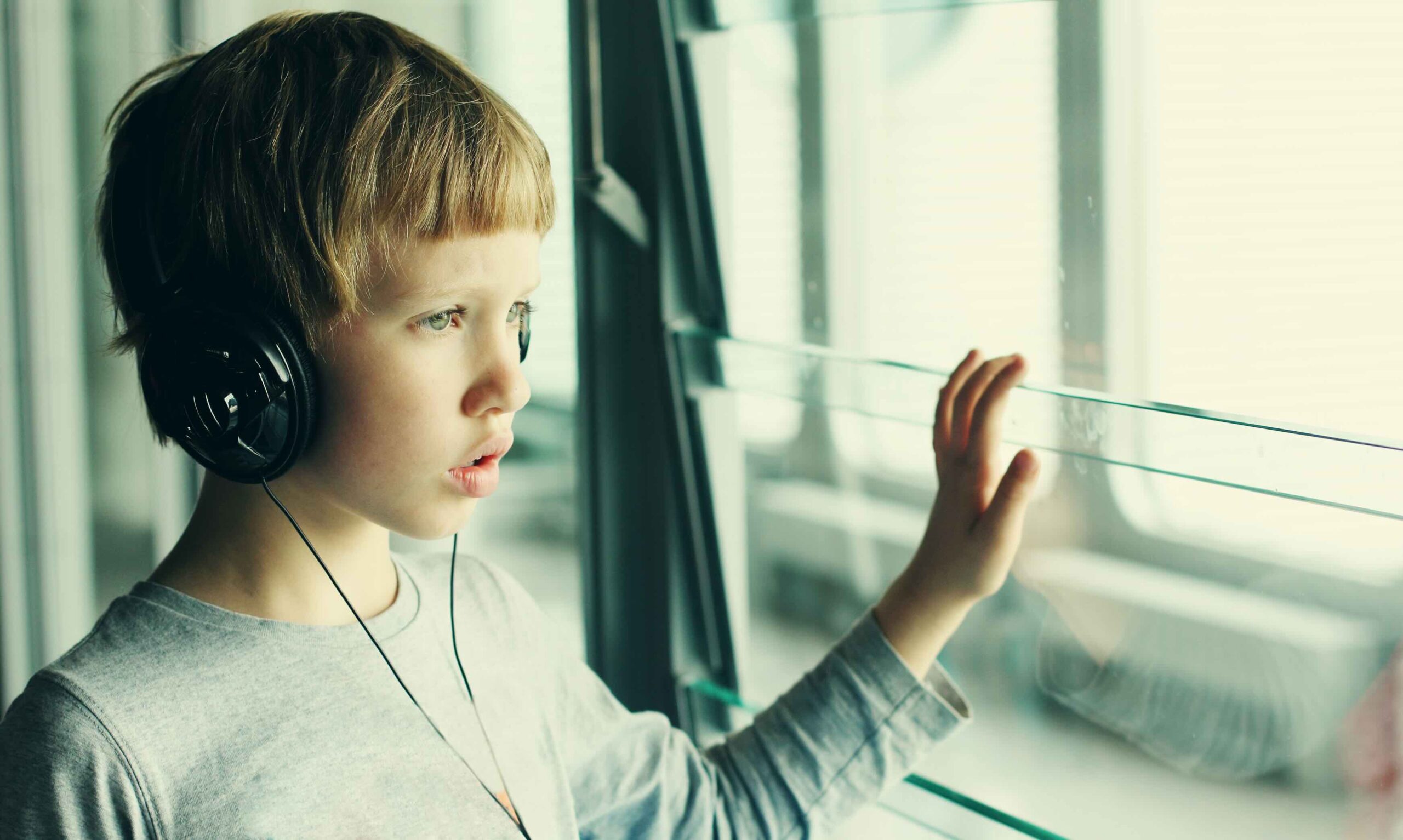
- Ear defenders
- Predictable routines
- Reduced environmental demands
Follow the Child’s Interests:
Children often communicate more comfortably when discussing topics they enjoy.
Strong interests can be used to:
- Build rapport
- Increase confidence
- Encourage interaction
This approach is particularly helpful for autistic children.
Address Anxiety Directly:
Because selective mutism is fundamentally anxiety-based, approaches that reduce anxiety are often effective.
Evidence-based approaches may include:
- Cognitive behavioural approaches (adapted for age)
- Parent coaching
- School-based interventions
- Graduated exposure programmes
Research suggests that early intervention is associated with better outcomes.
When Should You Seek Professional Advice?
It may be worth seeking an assessment if your child:
- Speaks comfortably in some situations but not others.
- Has remained silent in school for over a month.
- Appears highly anxious when communication is expected.
- Shows signs of autism alongside communication difficulties.
- Is becoming distressed, isolated or avoiding school.
Assessment may involve:
- Speech and Language Therapy
- Educational Psychology
- Clinical Psychology
- Autism assessment services
Final Thoughts
Selective mutism is much more than shyness. It is a debilitating anxiety condition that can leave children feeling trapped between wanting to communicate and feeling unable to do so. For some children, selective mutism exists on its own; for others, it may occur alongside autism, anxiety disorders or sensory differences.
The good news is that with understanding, patience and evidence-based support, many children make significant progress. The key is recognising that the silence is not a choice. By reducing pressure, building confidence gradually and creating safe opportunities for communication, adults can help children find their voice in their own time.

References
American Psychiatric Association (2022) Diagnostic and Statistical Manual of Mental Disorders (DSM-5-TR). 5th edn. Washington, DC: American Psychiatric Association.
Driessen, J., Blom, J.D., Muris, P. and Blashfield, R.K. (2020) ‘Anxiety in children with selective mutism: A meta-analysis’, Child Psychiatry and Human Development, 51(2), pp. 330–341.
Klein, E.R., Armstrong, S.L., Shipon-Blum, E. and Gordon, J. (2019) ‘Assessing spoken language competence in children with selective mutism’, Clinical Child Psychology and Psychiatry, 24(4), pp. 647–661.
Mundy, P. and Newell, L. (2007) ‘Attention, joint attention and social cognition’, Current Directions in Psychological Science, 16(5), pp. 269–274.
Muris, P. and Ollendick, T.H. (2015) ‘Children who are anxious in silence: A review on selective mutism, the new anxiety disorder in DSM-5’, Clinical Child and Family Psychology Review, 18(2), pp. 151–169.
Steffenburg, H., Steffenburg, S. and Gillberg, C. (2020) ‘Children with selective mutism and autism spectrum disorders: A retrospective study’, European Child and Adolescent Psychiatry, 29(9), pp. 1235–1245.
Zakszeski, B.N. and DuPaul, G.J. (2017) ‘Selective mutism: A review of etiology, comorbidity, and treatment’, Psychology in the Schools, 54(7), pp. 767–781.