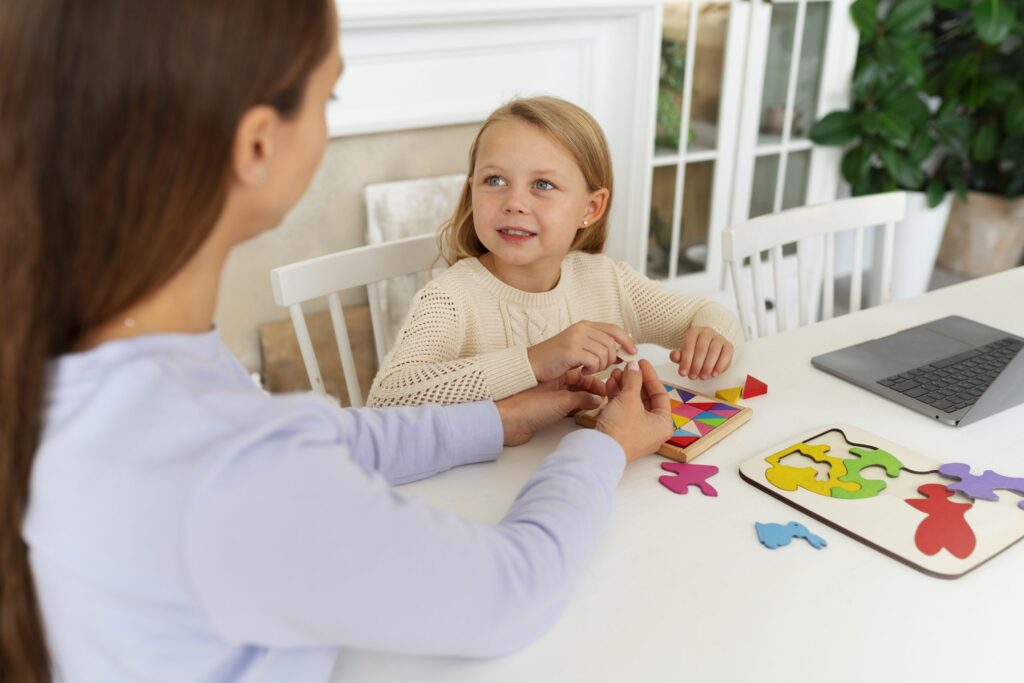
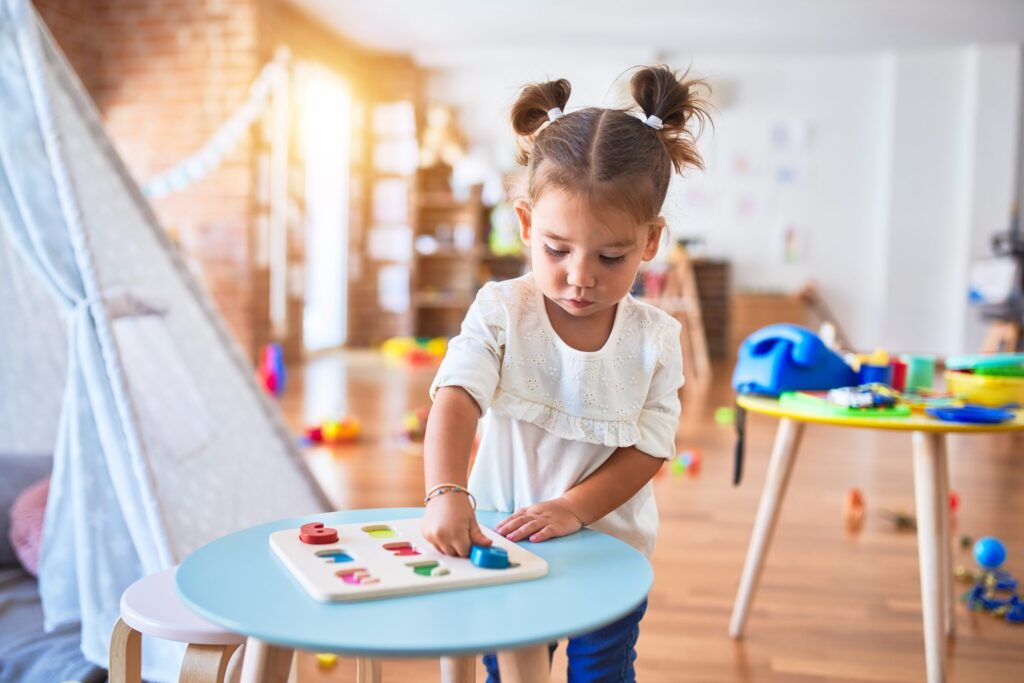
For many years, autism research was based primarily on boys. As a result, the signs of autism in girls—particularly girls who are verbally able and intellectually able—have often been overlooked. Research now suggests that autistic girls may present differently from autistic boys, contributing to delayed diagnosis, misidentification and a lack of support during the early years (Lai et al., 2015; Hull et al., 2020).
Parents frequently describe a situation where they see clear developmental differences at home, yet nursery staff report that their child appears settled, sociable and engaged. This discrepancy can be confusing and distressing. However, research increasingly suggests that autistic girls are more likely to use compensatory or “camouflaging” strategies from an early age, making their difficulties less obvious in structured environments (Dean et al., 2017; Hull et al., 2017).
In this article, autism specialist and clinical director Jo Condon explores what current research tells us about autism in preschool girls and the signs that may be missed by professionals unfamiliar with the female presentation of autism.
Why Autism in Girls Is Often Missed
Historically, autism was considered far more common in boys. Early studies reported male-to-female ratios of approximately 4:1. However, recent research suggests that the true ratio may be considerably lower, particularly amongst autistic children and adults without intellectual disability (Loomes et al., 2017).
Researchers have proposed several reasons why girls are under-identified:
- Diagnostic criteria were largely developed using predominantly male samples.
- Girls may have interests that appear more socially acceptable than the highly specific interests often observed in boys.
- Girls are more likely to observe and imitate peers.
- Professionals may hold outdated assumptions about how autism “should” look.
- Many girls demonstrate stronger superficial social skills despite underlying social communication difficulties.
Lai and colleagues (2015) describe autism in females as a potentially “masked” presentation, where difficulties are present but less immediately visible to others.
The Difference Between Home and Nursery
One of the most common themes reported by parents of autistic girls is that behaviours observed at home are not always seen in educational settings.
Research suggests that autistic girls often invest significant effort into observing peers, following rules and conforming to expectations (Dean et al., 2017). Consequently, nursery staff may see a quiet, compliant child who appears to cope well.
At home, however, the same child may become emotionally overwhelmed, experience lengthy meltdowns or show significant rigidity around routines.
This does not mean that difficulties are absent at nursery. Rather, it may indicate that considerable mental effort has been spent coping throughout the day. Research into camouflaging suggests that maintaining this appearance can be cognitively and emotionally exhausting (Hull et al., 2017).
Speech and Language Development
Unlike some autistic children who experience language delays, many autistic girls develop speech within expected developmental timeframes.
Research suggests that verbally able autistic girls may demonstrate age-appropriate vocabulary but show subtle differences in how language is used socially (Kreiser & White, 2014).
Parents may notice that their child:
- Talks extensively about preferred topics.
- Finds back-and-forth conversation difficult.
- Uses learned phrases repeatedly.
- Appears unusually formal for their age.
- Has difficulty adapting language to different social contexts.
Some girls acquire language quickly but struggle with the social use of communication, sometimes referred to as pragmatic language skills.
Eye Contact: Looking Is Not the Same as Connecting
A persistent myth is that autistic children do not make eye contact.
In reality, many autistic individuals make eye contact but experience it differently from non-autistic peers. Research suggests that some autistic people actively monitor facial expressions and social cues through observation rather than engaging in spontaneous social reciprocity (Senju & Johnson, 2009).
Preschool girls may:
- Look carefully at faces to work out expectations.
- Watch others before responding.
- Use eye contact inconsistently.
- Look particularly when seeking reassurance or approval.
What can appear to be typical eye contact may actually reflect conscious observation and learning.
Non-Verbal Communication Differences
Research consistently identifies difficulties integrating verbal and non-verbal communication as a core feature of autism (American Psychiatric Association, 2013).
In verbally able girls, these differences may be subtle.
For example:
- Gestures may be learned and used in specific situations rather than spontaneously.
- Facial expressions may appear exaggerated or copied from others.
- Eye contact, facial expressions and gestures may not be naturally coordinated.
- A child may point without looking at another person or use words without accompanying gestures.
These nuances often only become apparent through careful clinical observation.
Social Interaction: Interested but Struggling
A common misconception is that autistic children lack interest in other people.
In fact, many autistic girls show a strong desire for friendship and social connection (Sedgewick et al., 2016).
At nursery, they often have one or two preferred friends and may appear socially engaged. However, research suggests that their social interactions are frequently less reciprocal and flexible than those of their peers.
Girls may adopt one of two social styles:
The Passive Child: This child follows others, copies peers and allows others to direct play.
The Controlling Child: This child seeks predictability by directing interactions and determining how games should unfold.
Both presentations can reflect underlying difficulties understanding and managing the complexity and unpredictability of peer relationships.
Play Differences in Preschool Girls
Pretend play has traditionally been viewed as an area of strength in girls who later receive an autism diagnosis.
However, research suggests that the quality of imaginative play may differ from that of non-autistic children (Knickmeyer et al., 2008).
A preschool autistic girl might:
- Repeatedly act out the same scenarios.
- Recreate scenes from television programmes.
- Focus on organising toys rather than generating stories.
- Repeat familiar play sequences.
- Spend significant periods arranging or categorising objects.
At first glance, this may resemble typical imaginative play, but closer observation often reveals reduced flexibility and creativity.
Friendships and Peer Play
Research shows that autistic girls frequently demonstrate stronger superficial friendship skills than autistic boys (Dean et al., 2017).
Despite this, difficulties often emerge during sustained interaction.
Parents and practitioners may observe:
- Following peers rather than contributing ideas.
- Becoming upset when games change unexpectedly.
- Struggling to negotiate different viewpoints.
- Dropping out of play when unable to control it.
- Preferring structured rather than free-flowing activities.
Because the child appears to have friends, professionals may overlook these more subtle social differences.
Sensory Differences
Sensory processing differences are now recognised within DSM-5 diagnostic criteria for Autism Spectrum Disorder (American Psychiatric Association, 2013).
Studies suggest that between 69% and 95% of autistic children experience significant sensory processing differences (Ben-Sasson et al., 2009).
Sensory Seeking
Preschool girls may:
- Chew clothing or objects.
- Seek particular textures.
- Watch spinning objects.
- Enjoy repetitive movement.
However, these behaviours may be suppressed in public settings.
Sensory Sensitivities
Girls may experience strong reactions to:
- Loud noises.
- Strong smells.
- Food textures.
- Clothing labels.
- Hair brushing.
- Busy environments.
Parents often report that these difficulties are far more apparent at home than at nursery because accommodations are already being made within the family environment.
Repetitive Behaviours and Stimming
Restricted and repetitive behaviours are a core feature of autism.
In girls, these behaviours may look different from traditional stereotypes.
Research suggests that autistic girls are more likely to suppress visible repetitive behaviours in social environments (Hull et al., 2020).
Examples include:
- Finger movements hidden inside sleeves.
- Small repetitive movements during play.
- Repetitive humming or singing.
- Twirling hair.
- Repetitive sensory play.
Because these behaviours are less obvious, they can easily be missed.
Difficulties with Change and Routine
Many autistic children experience distress when routines change unexpectedly.
Research links this to differences in cognitive flexibility and intolerance of uncertainty (South & Rodgers, 2017).
In preschool girls this may appear as:
- Wanting to sit in the same place every day.
- Following specific rituals during dressing or mealtimes.
- Becoming distressed when plans change.
- Difficulty transitioning between activities.
- Preference for familiar toys, foods and activities.
These patterns are often interpreted as personality traits rather than indicators of neurodevelopmental differences.
Emotional Dysregulation and Masking
One of the strongest indicators of unmet needs in autistic preschool girls can be emotional exhaustion.
Research increasingly shows that camouflaging behaviours may contribute to anxiety, stress and emotional dysregulation (Hull et al., 2017; Cook et al., 2021).
A child who appears calm and compliant at nursery may:
- Experience frequent meltdowns at home.
- Become emotionally overwhelmed after social situations.
- Display increased rigidity and anxiety.
- Need significant recovery time following nursery attendance.
Importantly, this does not indicate poor parenting or inadequate boundaries. Rather, it may reflect the fact that home is the place where the child feels safest to express distress.
When Should Parents Seek Advice?
If you recognise several of the signs described above, it may be helpful to discuss your concerns with your health visitor, GP or nursery.
However, research shows that autistic girls are frequently identified later than boys and are often overlooked when their presentation differs from traditional stereotypes (Lockwood Estrin et al., 2021).
Parents are experts in their own child. If professionals report that everything appears typicalbut you continue to observe persistent differences in communication, social interaction, play, sensory processing or emotional regulation, it is important that your concerns are taken seriously.
An autism assessment is not about labelling a child. It is about understanding how they experience the world, identifying strengths and differences, and ensuring appropriate support is available as early as possible.
Early identification can improve access to support, reduce family stress and help children develop strategies that promote wellbeing and positive outcomes throughout childhood and beyond.
References
American Psychiatric Association (2013) Diagnostic and Statistical Manual of Mental Disorders. 5th edn. Washington, DC: American Psychiatric Publishing.
Ben-Sasson, A., Hen, L., Fluss, R., Cermak, S.A., Engel-Yeger, B. and Gal, E. (2009) ‘A meta-analysis of sensory modulation symptoms in individuals with autism spectrum disorders’, Journal of Autism and Developmental Disorders, 39(1), pp. 1–11.
Cook, J., Hull, L., Crane, L. and Mandy, W. (2021) ‘Camouflaging in autism: A systematic review’, Clinical Psychology Review, 89, 102080.
Dean, M., Harwood, R. and Kasari, C. (2017) ‘The art of camouflage: Gender differences in the social behaviours of girls and boys with autism spectrum disorder’, Autism, 21(6), pp. 678–689.
Hull, L., Petrides, K.V., Allison, C., Smith, P., Baron-Cohen, S., Lai, M.-C. and Mandy, W. (2017) ‘“Putting on my best normal”: Social camouflaging in adults with autism spectrum conditions’, Journal of Autism and Developmental Disorders, 47(8), pp. 2519–2534.
Hull, L., Mandy, W. and Petrides, K.V. (2020) ‘Behavioural and cognitive sex/gender differences in autism spectrum condition and typically developing males and females’, Autism, 24(2), pp. 466–476.
Knickmeyer, R.C., Wheelwright, S., Hoekstra, R., Baron-Cohen, S. and others (2008) ‘The role of gender in the presentation of autism spectrum disorders’, Expert Review of Neurotherapeutics, 8(6), pp. 863–875.
Kreiser, N.L. and White, S.W. (2014) ‘ASD in females: Are we overstating the gender difference in diagnosis?’, Clinical Child and Family Psychology Review, 17(1), pp. 67–84.
Lai, M.-C., Lombardo, M.V. and Baron-Cohen, S. (2015) ‘Autism’, The Lancet, 383(9920), pp. 896–910.
Lockwood Estrin, G., Milner, V., Spain, D., Happé, F. and Colvert, E. (2021) ‘Barriers to autism spectrum disorder diagnosis for young women and girls: A systematic review’, Review Journal of Autism and Developmental Disorders, 8(4), pp. 454–470.
Loomes, R., Hull, L. and Mandy, W.P.L. (2017) ‘What is the male-to-female ratio in autism spectrum disorder? A systematic review and meta-analysis’, Journal of the American Academy of Child & Adolescent Psychiatry, 56(6), pp. 466–474.
Sedgewick, F., Hill, V., Yates, R., Pickering, L. and Pellicano, E. (2016) ‘Gender differences in the social motivation and friendship experiences of autistic and non-autistic adolescents’, Journal of Autism and Developmental Disorders, 46(4), pp. 1297–1306.
Senju, A. and Johnson, M.H. (2009) ‘The eye contact effect: Mechanisms and development’, Trends in Cognitive Sciences, 13(3), pp. 127–134.
South, M. and Rodgers, J. (2017) ‘Sensory, emotional and cognitive contributions to anxiety in autism spectrum disorders’, Frontiers in Human Neuroscience, 11, 20.