A career dedicated to improving understanding of autism
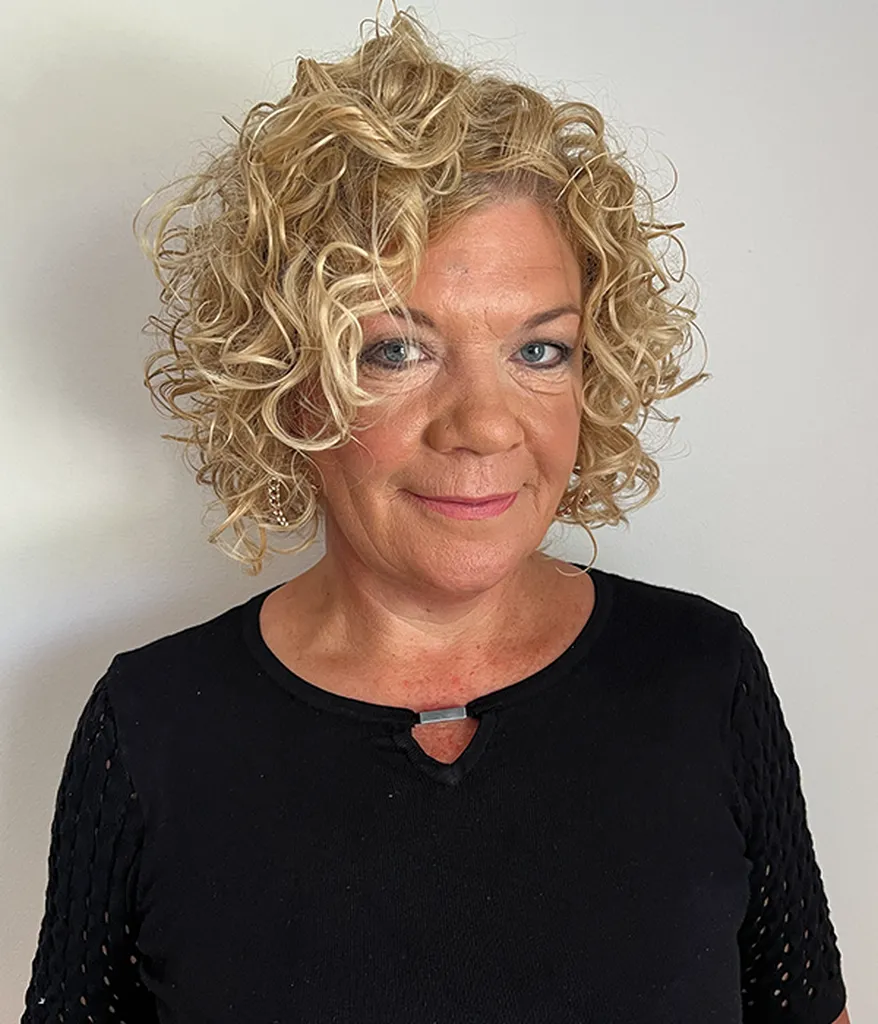
For more than 25 years, Jo Condon has worked with autistic children, adults and families, as well as the professionals and services that support them.
Her career has taken her from frontline mental health nursing and Child and Adolescent Mental Health Services (CAMHS), through senior clinical leadership, national autism strategy, research and special educational needs services, to establishing Jo Condon Autism Assessments.
Throughout that time, one thing has remained constant: Jo’s belief that people deserve to be properly understood.
For her, autism assessment has never simply been about reaching a diagnostic decision. It is about understanding the person behind the assessment, their developmental history, the experiences that have shaped them, the things they find difficult and the strengths they may have spent years overlooking.
Jo is an NMC Registered Mental Health Nurse. She is a former National Autism Lead for Wales and has held senior clinical and service leadership positions across the NHS, local government and specialist autism and ADHD services.
She is also a published autism researcher and has contributed to national autism resources, professional training and work aimed at improving the recognition of autism.
Today, she brings all of that experience together as Founder, Director and Clinical Lead of Jo Condon Autism Assessments.
But behind the job titles and professional experience is something much simpler: a longstanding commitment to making autism services better for the people who need them.
Where it began: mental health, CAMHS and autism
Jo began her career as a mental health nurse, working on an inpatient unit with children and young people with complex mental health and neurodevelopmental differences on a national CAMHS assessment unit.
She then became one of the founding members of a specialist autism outreach service in the Croydon CAMHS service, being involved in her first autism assessment in 2003. She later held other senior CAMHS roles, including Senior Management in Community CAMHS across South Wales.
It was during these years that autism became an increasingly important part of her professional life. Working directly with children and families gave Jo an appreciation of just how different autism can look from one person to another. It also showed her the consequences when those differences are misunderstood.
These early experiences helped shape an approach Jo still holds today: you have to understand the whole person, not simply look for a list of behaviours.
As her career progressed, Jo became increasingly involved in developing and leading services, combining her clinical understanding with a growing interest in how autism services could be improved on a much wider scale.
That eventually took her from individual clinical work into national autism development.
Helping to shape autism services in Wales
A significant part of Jo’s career was spent helping to develop and improve autism services across Wales.
From 2009 to 2017 she worked within national autism development, becoming National Autism Lead for Wales and heading the National Autism Development Team.
This was an important period in the development of autism provision in Wales.
Jo worked across health, social care, education, local government and the third sector, helping to turn national autism policy into practical improvements for autistic people, families and professionals.
Her work included supporting autism leads across Wales, developing national training and resources, sharing good practice and helping services think more collaboratively about how autistic people should be supported.
She worked with professionals across all 22 Welsh local authorities, helping local areas develop and implement their autism plans while identifying common gaps and areas in which national resources could make a difference.
It was work that required much more than knowledge of autism.
It involved listening to families and professionals, bringing different organisations together, understanding why services sometimes failed people and finding practical ways of improving them.
Jo also contributed to the wider development and evaluation of autism policy in Wales. She was among the external members of the research steering group involved in the independent Welsh Government evaluation of the Autism Spectrum Disorder Strategic Action Plan.
The experience gave her an unusually broad perspective on autism.
She had begun her career seeing the challenges faced by individual children and families. At national level, she could see how many of those individual experiences were connected to wider issues in systems, training, understanding and access to services.
Sharing Wales’s experience more widely
The work taking place in Wales also attracted interest from outside the country.
Jo was invited to share her experience of autism strategy and service development internationally.
In 2015, presenting professionally as Johanna Manikiza, she spoke in Brussels about Wales’s approach to autism and the work of the National Autism Development Team.
She later presented at Autism-Europe’s international congress on integrating services at national and local level. At that time, she was described as playing a key role in developing and coordinating autism provision and resources throughout Wales.
These opportunities allowed Jo to share what Wales had learned, but also to learn from other professionals and services.
That willingness to share knowledge has remained an important part of her career. Jo has never believed that expertise is particularly useful if it stays within one clinic, organisation or profession.
Improving autism services depends on professionals learning from one another and, importantly, listening to autistic people and their families.
Bringing research into everyday autism practice
Alongside her clinical and national work, Jo has been involved in autism research and the development of practical approaches to helping professionals recognise autism.
She is a named co-author of peer-reviewed research published in Molecular Autism examining the Signposting Questionnaire for Autism (SQ-A).
The questionnaire was developed as a way of helping parents and frontline professionals recognise characteristics that may be associated with autism in children.
For Jo, work such as this has always had a very practical purpose. Early recognition matters.
When autism is not recognised, children and adults may spend years being viewed through the wrong lens. Anxiety may be recognised without anyone asking what lies behind it. Behaviour may be interpreted as wilful or challenging. Social difficulties may be attributed to shyness. Adults may simply grow up believing that things other people seem to manage naturally are somehow harder because they are failing.
Improving recognition can therefore be the beginning of something much more important: understanding.
Making autism knowledge useful
One of the threads running through Jo’s career has been an interest in taking specialist knowledge out of clinical and academic settings and making it useful in everyday life.
She has worked alongside researchers and other autism specialists on resources designed to help professionals recognise and understand autism.
Jo initiated and contributed to the development of the internationally recognised SIGNS approach to autism identification, working alongside Professor Sue Leekam, Dr Catherine Jones, Dr Judith Gould CBE and other colleagues. The team produced posters and “The Birthday Party”, an 18-minute training film based on SIGNS. The film has since been translated into four European languages and used in autism training worldwide. The SIGNS system won the People’s Choice award at Cardiff University’s Innovation and Impact Awards in 2019.
Jo has contributed to national guidance and developed autism awareness materials, training programmes and educational resources, including resources for schools and families. Her ‘Learning with Autism’ programme was accessed by thousands of education practitioners.
SEND and Education
Jo’s career later took her further into the area of education.
She joined Birmingham City Council as Interim Autism Strategic Lead before becoming Interim Head of SENAR Operations, leading work within Birmingham’s Special Educational Needs Assessment and Review service. This statutory SEND service was responsible for education, health and care needs assessments, and issuing and reviewing EHCPs.
During her time in Birmingham, Jo steered the service through a particularly challenging period, working to improve stability and strengthen service delivery.
Her contribution was publicly recognised in Birmingham City Council’s December 2022 SEND Improvement Update, in which the Director of SEND and Inclusion specifically thanked Jo for her dedication, determination and work in stabilising the SENAR service.
Leading autism and ADHD assessment services
Alongside her national and public-sector work, Jo has held senior positions in specialist neurodevelopmental services.
She has held the positions of Head of Autism and ADHD Services at Healios and Clinical Director at Veritas Autism Assessments.
These roles gave her extensive experience of developing and overseeing specialist assessment services and of the clinical responsibilities involved in assessing children and adults.
They also gave her insight into what makes an assessment service work well and what can get lost when services become too focused on processes rather than people.
Good clinicians need proper support. They need time to think, opportunities to discuss complex cases, access to appropriate information and the professional freedom to say when the evidence does, or does not, support a particular conclusion.
Those principles would later become important when Jo decided to establish her own service.
A particular interest in people who have been overlooked or dismissed
Throughout her career, Jo has developed particular interests in both the early identification of autism in young children and in people whose autistic characteristics may be less immediately obvious.
She has a longstanding interest in understanding how autism first presents in young children, both with and without language. Alongside this, she is particularly interested in women and girls, adults seeking a diagnosis later in life, people who mask or camouflage their difficulties, and those whose experiences may previously have been understood in terms of anxiety, mental health difficulties or other diagnoses.
Real people rarely fit neatly into stereotypes; Jo believes this is where experience really matters.
A thorough assessment involves gathering enough information to be able to understand a person’s development and experiences as a whole..
Why Jo founded Jo Condon Autism Assessments
After many years working within large organisations and specialist services, Jo wanted to create an autism assessment service where clinical quality and individual understanding could remain at the centre of every decision.
She founded Jo Condon Autism Assessments in 2025 and now leads its clinical direction and multidisciplinary assessment team.
Her aim was not simply to create another route to a private diagnosis.
It was to create the kind of service she would want people to experience herself: somewhere families and adults feel listened to, where clinicians have enough information to make careful decisions and where honesty matters more than reaching a particular outcome. Jo believes people should be treated with warmth and respect throughout the process, whatever the eventual outcome.
Jo remains closely involved in the clinical direction of the service and in supporting the professionals who deliver assessments.
She believes that looking after clinical standards also means looking after clinicians.
A thoughtful assessment requires clinicians who have the experience, time and support to think carefully about the information in front of them, particularly when someone’s presentation is complex.
A career that has come full circle
Jo’s career has taken her through many different parts of the autism and SEND world. She has worked directly with adults, children and families in services, managed CAMHS teams, developed and directed neurodevelopmental assessment services, led a statutory SEND service, contributed to research and created countless autism awareness-raising and training resources. These experiences have shown her autism from very different perspectives, but they have also repeatedly brought her back to the same conclusion.
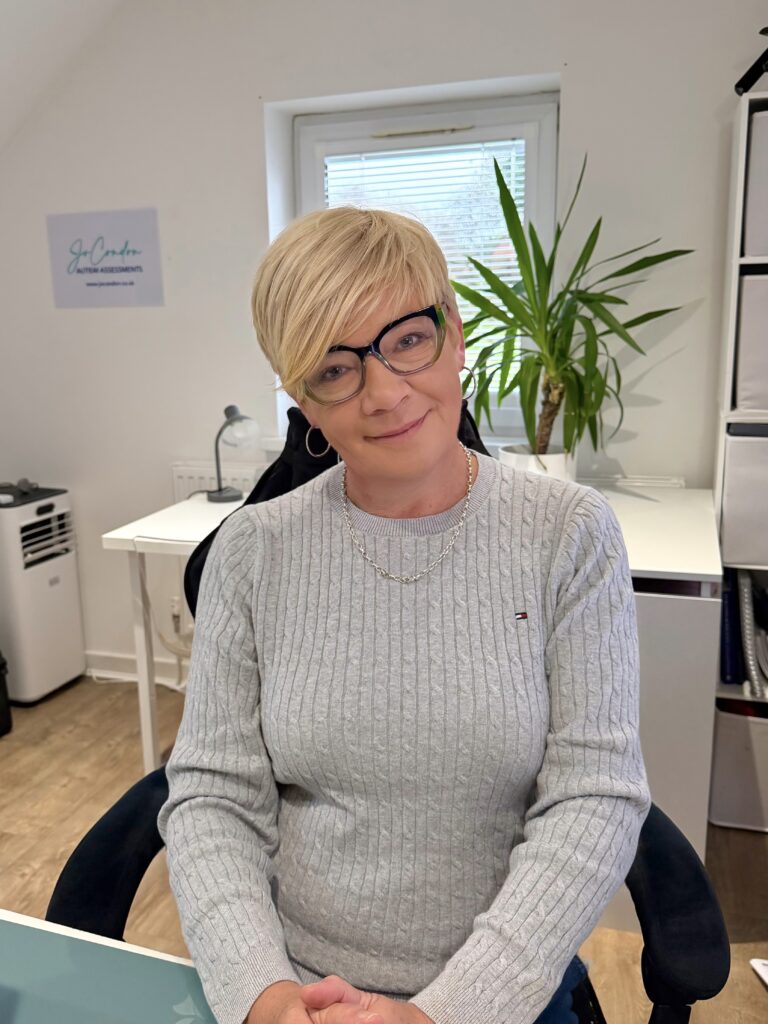
“People do better when they feel understood.“
More than 25 years after beginning her career in mental health services, her motivation remains remarkably similar to where it started: to understand people properly, to improve the services around them and to help autistic people and their families feel heard, respected and supported.
Peer-reviewed research
Jones, C.R.G., Barrett, S.L., Bite, I. et al. (2020). Development of the Signposting Questionnaire for Autism (SQ-A): measurement comparison with the 10-item Autism Spectrum Quotient-Child and the Strengths and Difficulties Questionnaire in the UK and Latvia. Molecular Autism, 11, Article 64. DOI: 10.1186/s13229-020-00368-9.