
Introduction
In the United Kingdom, the majority of autistic children are educated in mainstream schools. According to the National Autistic Society, approximately 73% of autistic pupils attend mainstream educational settings. Despite increasing awareness of autism and greater emphasis on inclusion, research consistently demonstrates that many autistic pupils face significant barriers to full participation, belonging and wellbeing within mainstream education. NAS Education Report 2023 reported that only 26% of autistic pupils said they felt happy at school, highlighting the gap between policy aspirations and lived experience.
Importantly, autistic pupils’ experiences are highly variable. Many thrive academically and socially when appropriate support and reasonable adjustments are in place. However, a substantial body of research indicates higher rates of anxiety, bullying, exclusion, school absence and mental health difficulties compared with non-autistic peers.
This article explores the evidence surrounding autistic pupils’ experiences of mainstream schools, including the challenges they face, the factors associated with positive outcomes and the implications for educational practice.
Autism and Mainstream Education
Autism is a neurodevelopmental difference characterised by differences in social communication and interaction alongside restricted, repetitive or highly focused patterns of behaviour, interests and sensory experiences.
Mainstream schools are designed largely around neurotypical expectations of communication, learning and behaviour. As a result, autistic pupils often find themselves navigating environments that may not naturally accommodate their needs.
Research synthesising the experiences of autistic pupils in mainstream schools identified several common barriers to inclusion, including:
- Sensory overload
- Friendship difficulties
- Increased anxiety
- Experiences of bullying
- Social misunderstanding
- Classroom environments that are difficult to access
- Lack of autism understanding among staff and peers
These challenges can significantly affect educational engagement and wellbeing.
Sensory Overload and the School Environment
One of the most frequently reported challenges for autistic pupils is managing the sensory demands of mainstream schools.
School environments can be overwhelming due to:
- Crowded corridors
- Inflexible uniform requirements
- Noisy classrooms
- School bells
- Bright lighting
- Busy dining halls
- Strong smells
- Unpredictable movement and activity
The Autism Transitions Project found that sensory stress was one of the most significant factors affecting autistic young people’s experiences and educational outcomes. Many pupils described feeling exhausted by the constant sensory demands of the school day.
Research suggests that sensory overload can contribute to:
- Increased anxiety
- Reduced concentration
- Emotional dysregulation
- School avoidance
- Autistic burnout
Many autistic young people report needing significant recovery time after school because of the effort involved in managing sensory and social demands throughout the day.
Friendships and Social Inclusion
Although many autistic young people want meaningful friendships, social relationships can be one of the most challenging aspects of mainstream education.
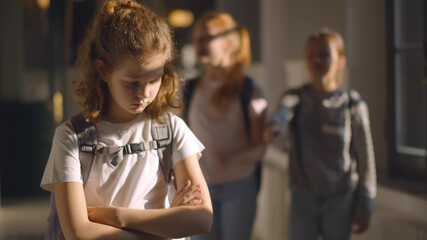
Mainstream schools place considerable emphasis on navigating complex social networks, unspoken rules and rapidly changing peer dynamics.
Research has consistently found that autistic pupils report more difficulties with:
- Making friends
- Maintaining friendships
- Understanding social expectations
- Experiencing a sense of belonging
The systematic review by Bailey and Baker (2020) identified friendship difficulties as one of the most common barriers to inclusion experienced by autistic pupils.
Many autistic young people describe feeling isolated even when surrounded by peers. Others report becoming socially exhausted by trying to maintain friendships that require continuous social effort.
The concept of the “double empathy problem” suggests that communication difficulties between autistic and non-autistic individuals are mutual rather than reflecting a deficit within autistic people alone. This perspective has increasingly influenced how researchers understand social experiences in school settings.
Bullying and Peer Victimisation
Bullying remains one of the most consistently reported negative experiences among autistic pupils.
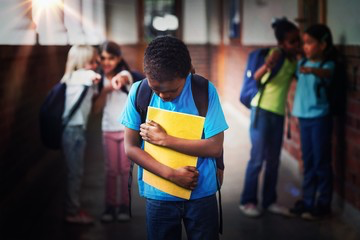
The Autism Transitions Project found that many autistic students experienced peer victimisation during their school years.
Research suggests autistic pupils are more vulnerable to bullying because of:
- Social differences
- Communication style differences
- Sensory needs
- Perceived vulnerability
- Being viewed as “different” by peers
Bullying can have significant consequences, including:
- Anxiety
- Depression
- Reduced self-esteem
- Emotionally based school avoidance
- Increased risk of exclusion
Anxiety and Mental Health
Autistic pupils experience substantially higher rates of anxiety than their non-autistic peers.
Research has identified several contributory factors:
- Sensory overload
- Uncertainty and unpredictability
- Social difficulties
- Bullying
- Academic pressures
- High expectations to conform to neurotypical behaviour
The literature review by Bailey and Baker (2020) identified anxiety as one of the most frequently reported difficulties experienced by autistic pupils in mainstream education.
Many autistic students describe school as a place where they spend large amounts of time managing anxiety rather than focusing on learning. In some cases, prolonged exposure to stress can contribute to autistic burnout, characterised by exhaustion, reduced functioning and difficulty coping with daily demands.
Masking and Camouflaging
A growing body of research has highlighted the prevalence of masking among autistic pupils.
Masking involves consciously or unconsciously suppressing autistic behaviours and copying neurotypical behaviours to fit in socially.
Examples include:
- Hiding stimming
- Mimicking peers’ social behaviours
- Forcing eye contact
- Suppressing sensory discomfort
- Rehearsing conversations
The Autism Transitions Project found that some pupils actively refused support because they did not want to appear different from their peers.
Although masking may help pupils avoid negative attention, research increasingly associates it with:
- Increased anxiety
- Emotional exhaustion
- Poor mental health
- Delayed recognition of support needs
Girls are particularly likely to engage in social camouflaging, which may partly explain why some autistic girls are identified later than boys.
Emotionally Based School Avoidance (EBSA)
Emotionally Based School Avoidance (EBSA), describes the situation where a child or young person experiences significant difficulty attending school due to emotional distress. EBSA is characterised by high levels of anxiety, distress and emotional overwhelm. Research consistently emphasises that children experiencing EBSA are generally unable to attend school rather than unwilling to attend.
Exclusion
Autistic pupils are disproportionately represented in exclusion statistics and school attendance difficulties.
Research reviewed in Investigation of the Causes and Implications of Exclusion for Autistic Children and Young People in England identified a range of factors contributing to exclusion, including insufficient understanding of autism, inadequate reasonable adjustments and behavioural responses to overwhelming environments.
Many exclusions occur when autistic behaviours are misunderstood as deliberate non-compliance rather than expressions of distress, anxiety or sensory overload.
What Helps Autistic Pupils Thrive?
Research consistently identifies several factors associated with positive school experiences.
These include:
Strong Autism Understanding
Autistic pupils report better experiences where staff understand autism and appreciate individual differences.
Sensory Adaptations
Providing quiet spaces, allowing sensory tools and reducing unnecessary sensory demands can significantly improve wellbeing.
Predictability and Structure
Clear routines, visual supports and advance notice of changes reduce anxiety and improve engagement.
Positive Relationships
Trusted adults and strong school-home partnerships are repeatedly associated with better outcomes.
Acceptance Rather than Compliance
Increasingly, research suggests that fostering autistic identity, reducing pressure to mask and creating genuinely inclusive environments promotes better mental health and educational outcomes.
Conclusion
For many autistic children and young people, mainstream schools provide valuable opportunities for learning, friendship and personal development. However, the evidence consistently demonstrates that autistic pupils continue to experience substantial barriers to participation and wellbeing.
Common challenges include sensory overload, friendship difficulties, bullying, anxiety, masking and higher rates of exclusion. These difficulties do not arise simply because a pupil is autistic; rather, they often reflect a mismatch between the needs of autistic learners and the environments in which they are expected to function.
The most positive outcomes occur when schools move beyond viewing autism as a set of deficits and instead focus on understanding autistic experiences, removing barriers, making reasonable adjustments and fostering genuine inclusion. By listening to autistic pupils themselves, schools can create environments where autistic children not only attend but genuinely thrive.
References
Bailey, J. and Baker, S.T. (2020) ‘A synthesis of the quantitative literature on autistic pupils’ experience of barriers to inclusion in mainstream schools’, Journal of Research in Special Educational Needs, 20(4), pp. 291–307.
National Autistic Society (2023) Education Report 2023. London: National Autistic Society.
Pellicano, E., Bölte, S. and Stahmer, A. (2018) ‘The current state of autism research priorities’.
York St John University (2024) School Transitions for Autistic Pupils: Findings from the Autism Transitions Research Project.
Autism Education Trust (2022) Investigation of the Causes and Implications of Exclusion for Autistic Children and Young People in England.
The Challenges of Mainstream Secondary School: A Synthesis of Autistic Students’ Views and Experiences (2025).